Prosperity without growth?

[Tim Jackson]  Economic growth is supposed to deliver prosperity. Higher incomes should mean better choices, richer lives, an improved quality of life for us all. That at least is the conventional wisdom. But things haven’t always turned out that way. Summary Economic growth is supposed to deliver prosperity. Higher incomes should mean better choices, richer lives, an improved quality of life for us all. That … Continue reading Prosperity without growth?

Sharing the pie

[Aseem Shrivastava] Policymakers say that the size of the pie in developing countries has to be enlarged before it can be distributed more equitably. But the way a country’s economy grows will determine whether there is anything left to distribute at the end of the growth process. “No problem can be solved from the same level of consciousness that created it.” Albert Einstein Three closely related … Continue reading Sharing the pie

La paz perenne con la naturaleza y la Madre Tierra

[Leonardo Boff] Uno de los legados más fecundos de Francisco de Asís, actualizado por Francisco de Roma, es la oración por la paz, tan urgente en los días actuales. El primer saludo que San Francisco dirigía a los que encontraba era desearles “Paz y Bien” que corresponde al Shalom bíblico. La paz que ansiaba no se restringía a las relaciones interpersonales y sociales. Buscaba una … Continue reading La paz perenne con la naturaleza y la Madre Tierra

Everlasting peace with nature and with Mother Earth

[Leonardo Boff, 20 April 2014 ] One of the more fertile legacies of Francis of Assisi, actualized by Francis of Rome, is the Prayer for Peace, which is so urgent at the present. Saint Francis initially greeted those he saw by wishing them, “Peace and Good,” which corresponds to the Biblical Shalom. The peace he longed for was not limited to interpersonal and social relations. … Continue reading Everlasting peace with nature and with Mother Earth

The Only Viable Economy

[István Mészáros] 1. Once upon a time the capitalist mode of production represented a great advance over all of the preceding ones, however problematical and indeed destructive this historical advance in the end turned out—and had to turn out—to be.  By breaking the long prevailing but constraining direct link between human use and production, and replacing it with the commodity relation, capital opened up the dynamically unfolding possibilities … Continue reading The Only Viable Economy

Post-crecimiento y buen vivir como alternativas para alcanzar sociedades equitativas y sustentables

[Entrevista a Maristella Svampa, en la columna La Tijereta, abril de 2014]. Se presenta conceptos de post-crecimiento y buen vivir como alternativas ante la realidad global que demuestra que si bien el crecimiento económico se ha cuadruplicado en los últimos cuarenta años, el mismo está lejos de mejorar la condición de vida de la mayoría o de alcanzar una distribución equitativa de la riqueza. El … Continue reading Post-crecimiento y buen vivir como alternativas para alcanzar sociedades equitativas y sustentables

PLAN C: REDISTRIBUCIÓN DE LA RIQUEZA – YASUNÍ E INDÍGENAS AISLADOS

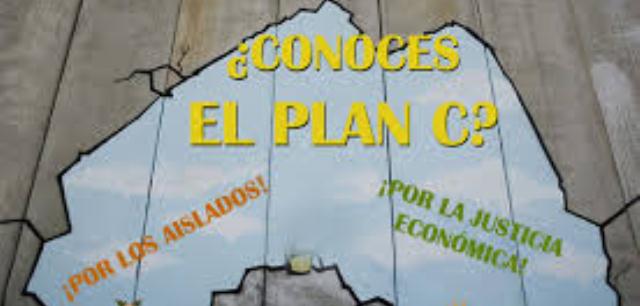
[Centro de Derechos Económicos y Sociales, agosto 2013(1)] Contrarrestar la pobreza en nuestro país no depende de la explotación del Yasuni – ITT, pues ésta es resultado de estructuras injustas de distribución del ingreso, que generan una economía altamente concentrada donde los mayores recursos producidos terminarán enriqueciendo a una élite pequeña de la población, al tiempo que la población mayoritaria verá mejorar sus condiciones de … Continue reading PLAN C: REDISTRIBUCIÓN DE LA RIQUEZA – YASUNÍ E INDÍGENAS AISLADOS

Between Eti Uwem and Green Capitalism (Green Democracy)

[Nnimmo Bassey] Eti uwem is a concept in Ibibio, one of the several languages in Nigeria, which literally means good life or good living. Within it is the idea of living in harmony with nature and all peoples. It incorporates dignity, respect, rectitude, integrity, solidarity and contentment. Within this concept are the key principles of social justice, power relations and citizens’ and communal ownership and control of local resources. It … Continue reading Between Eti Uwem and Green Capitalism (Green Democracy)

Bien communs, sphère publique et « gauche de transformation sociale

[Christophe Aguiton, 2012] La remise en cause de la propriété privée des principaux moyens de production et d’échange a toujours été au cœur de la doctrine des différents courants de la gauche de transformation sociale. La forme que devrait prendre la propriété collective à opposer à la propriété privée a en revanche beaucoup varié avec le temps et l’une d’entre elles – les « biens communs » … Continue reading Bien communs, sphère publique et « gauche de transformation sociale

How economic growth has become anti-life

[Vandana Shiva, 2013] Limitless growth is the fantasy of economists, businesses and politicians. It is seen as a measure of progress. As a result, gross domestic product (GDP), which is supposed to measure the wealth of nations, has emerged as both the most powerful number and dominant concept in our times. However, economic growth hides the poverty it creates through the destruction of nature, which in … Continue reading How economic growth has become anti-life

The Next New Economy. How a global phenomenon takes off in one city

[Jessica Conrad, March 2014] At half past three in the morning, Alec Johnson rolls out of bed, puts on his uniform, and walks a block to one of Nice Ride’s bike sharing stations in the Seward neighborhood of Minneapolis. He unlocks a neon green bike and pedals down the Midtown Greenway, a former railroad corridor that now features biking and walking paths, to his job … Continue reading The Next New Economy. How a global phenomenon takes off in one city

A New Story for a New Economy: To Find Our Human Place in a Living Universe

[David Korten] Economists debate whether the economy is recovering from the financial crash of 2008. Scientists debate whether Earth will recover from an economy that is destroying Earth’s capacity to support life. An unconscionable gap between rich and poor – between the profligate and the desperate – grows at an alarming rate. Economists assure us that faster economic growth will provide the technology and financial … Continue reading A New Story for a New Economy: To Find Our Human Place in a Living Universe

Deglobalisation is the way to reduce inequality

[Pablo Solon, 8 March 2014] The race of globalisation is leaving the majority of the world’s population far behind. According to Unicef, the richest 20% of the population gets 83% of global income, while the poorest quintile has just 1%. This trend is getting worse. A new UNDP report called “Humanity Divided: estimates that 75% of the population lives in societies where income distribution is … Continue reading Deglobalisation is the way to reduce inequality

Mujeres, comida y cuidados

[Esther Vivas, 08/03/2014].”Se trata, como dicen las economistas feministas, de colocar la vida en el centro. Visibilizar, valorar y compartir dichos trabajos de cuidados, y la naturaleza. Hacer visible lo invisible, mostrar la parte oculta del “iceberg”. Valorar estas tareas como imprescindibles, reconocer quienes las ejercen y otorgarles el lugar que se merecen. Y, finalmente, compartirlas, ser corresponsables. La vida y el sustento es cosa … Continue reading Mujeres, comida y cuidados

David Harvey interview: The importance of postcapitalist imagination

[David Harvey, 2013] Editor’s note: This is an excerpt from an interview that ran in Red Pepper and the Irish Left Review in which Harvey sets out some ideas from his new book on the contradictions of capital. He says creating a post-capitalist world requires changing the monetary system and creating a common property regime. Q. Is the era of finance capitalism which has developed … Continue reading David Harvey interview: The importance of postcapitalist imagination

Entrevista a Yayo Herrero sobre ecofeminismo

[Realizada por Ruth Vicente para Ecopolítica, junio 2010] EcoPolítica: Cuando se habla del ecofeminismo, muchas mujeres feministas rechazan dicho planteamiento que, en ciertas corrientes, vuelve a dar a la mujer el papel de cuidadoras de vida. ¿Cómo ves tú estas críticas? ¿Crees que el ecofeminismo podría ser una alternativa para el mundo feminista y englobar al resto de mujeres que no se definen como tal? … Continue reading Entrevista a Yayo Herrero sobre ecofeminismo

Fixing our Global Food System: Food Sovereignty and Redistributive Land Reform

[Peter Rosset, 2009] The recent world food price crisis highlights what many have thought for a long time: the world’s food and agriculture system is broken. Few winners remain in the aftermath of the severe crisis, in which prices for basic food commodities (corn, wheat, rice, soybeans) increased dramatically in 2007 and 2008, only to fall rapidly in the second half of 2008. Although down … Continue reading Fixing our Global Food System: Food Sovereignty and Redistributive Land Reform

Poner la vida en el centro: respuestas del ecofeminismo y del decrecimiento a la UE

[Ecologistas en Acción, 2010] La Unión Europea es una de las regiones más ricas del planeta. Es rica porque la mayoría de los países que la constituyen tiene un PIB alto. Esto es valorado como algo positivo, porque el PIB indica que el capital de los países y sus economías crecen. Los indicadores económicos, como el PIB y el PNB, contabilizan el conjunto de bienes … Continue reading Poner la vida en el centro: respuestas del ecofeminismo y del decrecimiento a la UE

Iniciativa Yasuní-ITT. La difícil construcción de la utopía

[Alberto Acosta, 3 de febrero de 2014] -¿Hubiera modo, replicó don Quijote, de evitar este degüello? Si os incita el valor de estos cipreses, yo os los pago, y permanezcan ellos en pie. -Eso allá se iría con vender la tierra, y no es lo que me propongo, dijo el dueño; antes la estoy desmontando, no tanto por aprovecharme de estos árboles que no valen … Continue reading Iniciativa Yasuní-ITT. La difícil construcción de la utopía

Manifiesto ecosocialista

[Joel Kovel y Michael Löwy 2001] English Version Introducción. La idea de este manifiesto ecosocialista fue lanzada en conjunto por Joel Kovel y Michael Löwy en un taller sobre ecología y socialismo celebrado en Vincennes, cerca de París, en septiembre de 2001. Todos sufrimos de un caso crónico de la paradoja de Gramsci, al vivir en un tiempo cuyo viejo orden está muriendo (arrastrando a … Continue reading Manifiesto ecosocialista