




Matricidio del Estado patriarcal
[Raúl Prada Alcoreza, 25 de julio de 2013] Evaluación de la “Ley marco de la Madre Tierra y desarrollo integral para vivir bien” La primera pregunta que se nos viene es: ¿Por qué una Ley de la Madre Tierra y Desarrollo Integral para el Vivir Bien? Por lo menos hay tres conceptos que darían lugar a tres leyes distintas, de las cuales no son congruentes … Continue reading Matricidio del Estado patriarcal


Moving Forward: Agrarian Reform as a Part of Food Sovereignty
[Peter Rosset, from Promised Land, 2006] “Food sovereignty implies the implementation of radical processes of comprehensive agrarian reform adapted to the conditions of each country and region, which will provide peasant and indigenous farmers—with equal opportunities for women—with equitable access to productive resources, primarily land, water, and forests, as well as the means of production, financing, training, and capacity building for management and interlocution. Agrarian … Continue reading Moving Forward: Agrarian Reform as a Part of Food Sovereignty


Escaping the ‘iron cage’ of consumerism
[Tim Jackson] Society is faced with a profound dilemma. To resist economic growth is to court economic and social collapse. To pursue it relentlessly is to endanger the ecosystems on which we depend for long-term survival. For the most part, this dilemma goes unrecognised in government policy. It is only marginally more visible as a public debate. When reality begins to impinge on the collective … Continue reading Escaping the ‘iron cage’ of consumerism

What does food sovereignty look like?
[Raj Patel, Journal of Peasant Studies 36:3, 2009] Hannah Arendt observed that the first right, above all others, is the right to have rights. In many ways, Via Campesina’s call for food sovereignty is precisely about invoking a right to have rights over food. But it’s unclear quite how to cash out these ideas. This Grassroots Voices section examines some of the difficulties involved in parlaying … Continue reading What does food sovereignty look like?

Reflexiones sobre el sumak kawsay (el buen vivir) y las teorías del desarrollo
[Pablo Dávalos, 5 de agosto de 2008] La noción del buen vivir (sumak kawsay), como una nueva condición de contractualidad política, jurídica y natural, ha empezado su recorrido en el horizonte de posibilidades humanas, y de la mano de los pueblos indígenas de Ecuador y Bolivia. Es fundamental, entonces, empezar una reflexión sobre el sumak kawsay (buen vivir) en términos en los que el positivismo … Continue reading Reflexiones sobre el sumak kawsay (el buen vivir) y las teorías del desarrollo

Nuevas pistas para la transición poscapitalista a partir de la gestión colectiva de los bienes comunes
[Fundación Solón, noviembre de 2013] Investigadores, académicos y activistas de varios países de América Latina y Europa aportaron nuevos elementos y propuestas concretas para la elaboración colectiva de modelos de desarrollo alternativos en la “Conferencia internacional bienes comunes y nuevos paradigmas civilizatorios” que sesionó en la ciudad de La Paz, Bolivia, del 18 al 20 de noviembre de 2013. Hace más de dos años, activistas, … Continue reading Nuevas pistas para la transición poscapitalista a partir de la gestión colectiva de los bienes comunes

Algunas ideas sobre Piketty
[ David Harvey] Publicado por Guillem Murcia, 20 mayo 2014. A continuación publicamos la reseña que el profesor David Harvey ha hecho del libro de Thomas Piketty “El Capital en el siglo XXI”. David Harvey es profesor en la City University of New York, y lleva más de 40 años enseñando, divulgando e investigando sobre la opera magna de Marx, El Capital. Entre sus contribuciones se halla una serie de clases en vídeo sobre la obra … Continue reading Algunas ideas sobre Piketty

‘Ecofeminism’: a talk about hard work and great joy
[Maria Mies, Roar Magazine] Recently, the UK-based publisher Zed Books launched its Critique Influence Change series, which “brings together pivotal texts by notable academics and activists from Zed Books’ publishing of the last thirty-five years”. Over the coming weeks ROAR will publish a series of interviews with some of the authors from this varied and inspiring collection of critical analyses and theories. We will look … Continue reading ‘Ecofeminism’: a talk about hard work and great joy

Los golpes de espectro completo
[Ana Esther Ceceña. ALAI AMLATINA, 21/05/2014]. Nuevos aires cargados de viejos hábitos soplan sobre los territorios de Latinoamérica y el Caribe. La vocación hegemónica y su permanente necesidad de renovarse y reafirmarse trae consigo una cartera de elementos de seducción, disuasión o represión que pueden ser usados aislada o simultáneamente y que ofrecen la posibilidad de combinaciones muy diversas, versátiles y siempre, eso sí, con … Continue reading Los golpes de espectro completo

Alternative Regionalisms: Alternatives to Neo-liberal Globalisation
[Jose Briceño Ruiz, 2007] Alternatives to neo-liberal globalisation are needed that not only change people-to-people and South-South relations and situations, but also South-North relations and inter-actions to the benefit of all of humanity and our common planetary home. The new “alternative regionalisms” being promoted by social movements are, on the one hand, ‘alternative’ to the increasingly neo-liberal directions being taken, and the regional trade and investment … Continue reading Alternative Regionalisms: Alternatives to Neo-liberal Globalisation

Afterthoughts on Piketty’s Capital
[David Harvey] Thomas Piketty has written a book called Capital that has caused quite a stir. He advocates progressive taxation and a global wealth tax as the only way to counter the trend towards the creation of a “patrimonial” form of capitalism marked by what he dubs “terrifying” inequalities of wealth and income. He also documents in excruciating and hard to rebut detail how social … Continue reading Afterthoughts on Piketty’s Capital
¿La agricultura campesina y ecológica puede alimentar al mundo?
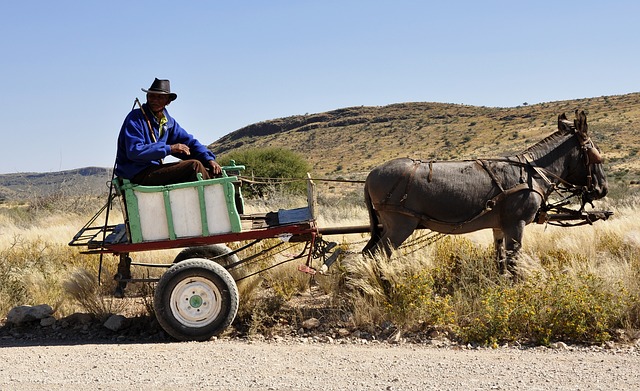
[Esther Vivas] La población mundial, se calcula, llegará en 2050 a los 9.600 millones de habitantes, según un informe de las Naciones Unidas. Lo que significa, 2.400 millones más de bocas que alimentar. Ante estas cifras, se extiende un discurso oficial que afirma que para dar de comer a tantísimas personas es imprescindible producir más. Sin embargo, es necesario preguntarnos: ¿Hoy falta comida? ¿Se cultiva … Continue reading ¿La agricultura campesina y ecológica puede alimentar al mundo?

The Geopolitical Earthquakes Reshaping Eurasia’s Economy
[Pepe Escobar, TomDispatch.com] Hong Kong—A specter is haunting Washington, an unnerving vision of a Sino-Russian alliance wedded to an expansive symbiosis of trade and commerce across much of the Eurasian land mass—at the expense of the United States. And no wonder Washington is anxious. That alliance is already a done deal in a variety of ways: through the BRICS group of emerging powers (Brazil, Russia, … Continue reading The Geopolitical Earthquakes Reshaping Eurasia’s Economy

Postcapitalismo, diálogo con François Houtart
[Bolivia – Abril, 2014. Entrevista realizada por Javier Larraín, miembro del Centro de Investigaciones (CIS)] Javier Larraín: A partir del nuevo siglo nuestra América ha sido escenario de transformaciones socioeconómicas, pero sobre todo de importantes transformaciones en el campo político con la emergencia de gobiernos como el de Hugo Chávez, Evo Morales y Rafael Correa. Usted ha sostenido que este es el único continente que … Continue reading Postcapitalismo, diálogo con François Houtart

Catching the Power of the Wind
[Thomas Berry, October 24, 1975] A Statement of the Occasion of the Thirtieth Anniversary of the United Nations at the Spiritual Summit Conference V On this thirtieth anniversary of the founding of the United Nations we wish to indicate to you our esteem for the work you have accomplished. For thirty years this body has carried within itself many of the larger hopes and destinies … Continue reading Catching the Power of the Wind

Décroissance juste et écoféminisme
Un entretien avec Yayo Herrero Yayo Herrero s’intéresse à la « décroissance juste » et aux questions qui lui sont associées. Pour elle, « la productivité capitaliste ne cherche pas à satisfaire les besoins », alors que « nous devons lier la production au maintien de la vie, non à sa destruction ». Elle est l’une des trois responsables coordinatrices de la confédération « Ecologistes en Action » (Etat espagnol) ; elle appartient également … Continue reading Décroissance juste et écoféminisme

Ecology Reframes History
[Ariel Salleh, 1997] Ecological crisis displaces modernist political analyses – liberalism, socialism, feminism. It provokes us to re-frame our history, to inscribe a new understanding of ourselves in relation to Nature, so called, and to ask how can we get to live this new sensibility in practical ways.1 That political moment is long due. The bourgeois and proletarian revolutions evaporated before realising their full potential; feminists … Continue reading Ecology Reframes History

Ecosocialism and Spirituality
[Frei Betto and Michael Löwy, 2009] We would like to start our conference here at the World Social Forum of Belem with a homage to two personalities of high human quality, which gave their lives for the defense of the Amazonian forest, and the Peoples of the Forest: Chico Mendes and Dorothy Stang. They are the best known, the visible tip of the iceberg, of … Continue reading Ecosocialism and Spirituality

«Il ne faut pas se battre pour la croissance mais pour la redistribution»
[Pablo Solon, 2012] Entretien avec Pablo Solon par Jade Lindgaard, publie le vendredi 7 Septembre, 2012 Le cycle de discussions préparatoires, avant la conférence de l’ONU sur le climat de novembre, à Doha, s’est tenu cette semaine à Bangkok. Enjeu : comment financer le Fonds vert pour le climat destiné à aider les pays pauvres à faire face au réchauffement climatique ? Et que faire … Continue reading «Il ne faut pas se battre pour la croissance mais pour la redistribution»
Villes en biens communs : interviews croisées
[Claire Brossaud] 1) Le festival Villes en biens communs sera particulièrement bien représenté à Lyon : quelles seront les principales thématiques abordées ? La particularité de Lyon est de couvrir un large spectre de thématiques qui va bien au delà du numérique : l’environnement, l’espace public, l’art, le savoir et la formation, l’économie collaborative, la participation citoyenne, etc. Certains événements font même cohabiter ensemble plusieurs … Continue reading Villes en biens communs : interviews croisées
 Systemic Alternatives
You must be logged in to post a comment.