


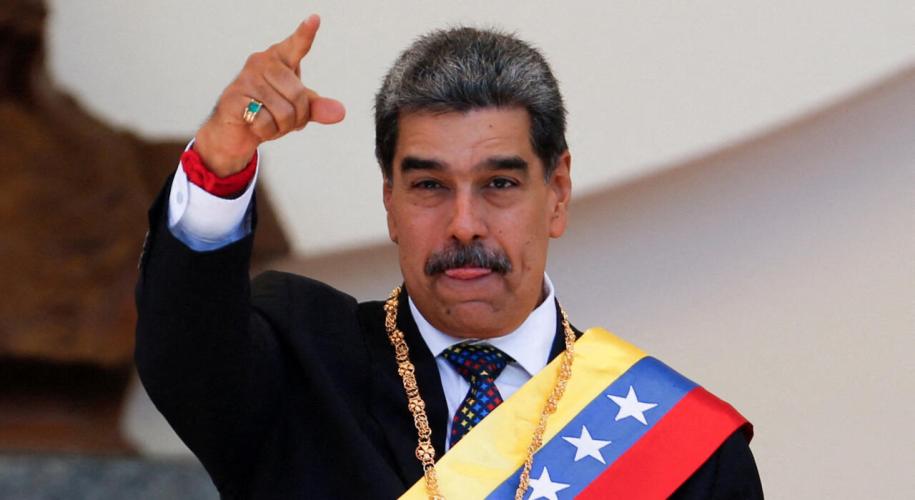



The Right to the City
[David Harvey – New Left Review 53, 2008] We live in an era when ideals of human rights have moved centre stage both politically and ethically. A great deal of energy is expended in promoting their significance for the construction of a better world. But for the most part the concepts circulating do not fundamentally challenge hegemonic liberal and neoliberal market logics, or the dominant modes … Continue reading The Right to the City

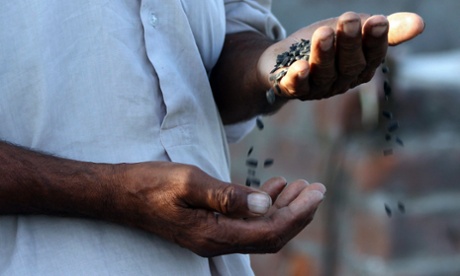
How economic growth has become anti-life
[Vandana Shiva, 2013] Limitless growth is the fantasy of economists, businesses and politicians. It is seen as a measure of progress. As a result, gross domestic product (GDP), which is supposed to measure the wealth of nations, has emerged as both the most powerful number and dominant concept in our times. However, economic growth hides the poverty it creates through the destruction of nature, which in … Continue reading How economic growth has become anti-life

The Next New Economy. How a global phenomenon takes off in one city
[Jessica Conrad, March 2014] At half past three in the morning, Alec Johnson rolls out of bed, puts on his uniform, and walks a block to one of Nice Ride’s bike sharing stations in the Seward neighborhood of Minneapolis. He unlocks a neon green bike and pedals down the Midtown Greenway, a former railroad corridor that now features biking and walking paths, to his job … Continue reading The Next New Economy. How a global phenomenon takes off in one city


The Crisis of Capitalism This Time Around
[David Harvey – prologue of “Seventeen Contradictions and the End of Capitalism” (Profile Books, 2014)] Crises are essential to the reproduction of capitalism. It is in the course of crises that the instabilities of capitalism are confronted, reshaped and re-engineered to create a new version of what capitalism is about. Much gets torn down and laid waste to make way for the new. Once-productive landscapes … Continue reading The Crisis of Capitalism This Time Around

A New Story for a New Economy: To Find Our Human Place in a Living Universe
[David Korten] Economists debate whether the economy is recovering from the financial crash of 2008. Scientists debate whether Earth will recover from an economy that is destroying Earth’s capacity to support life. An unconscionable gap between rich and poor – between the profligate and the desperate – grows at an alarming rate. Economists assure us that faster economic growth will provide the technology and financial … Continue reading A New Story for a New Economy: To Find Our Human Place in a Living Universe

Deglobalisation is the way to reduce inequality
[Pablo Solon, 8 March 2014] The race of globalisation is leaving the majority of the world’s population far behind. According to Unicef, the richest 20% of the population gets 83% of global income, while the poorest quintile has just 1%. This trend is getting worse. A new UNDP report called “Humanity Divided: estimates that 75% of the population lives in societies where income distribution is … Continue reading Deglobalisation is the way to reduce inequality

El sindrome de Fukushima. Un dilema entre la verdad o la violencia
[Elizabeth Peredo Beltrán, 2011]. El planeta está cambiando dramáticamente de manera “no natural”, ya no es el mismo que hace pocas décadas y su capacidad de cobijarnos también ha cambiado. En una enorme medida los cambios en la habitabilidad del planeta se han producido por la intervención de la civilización humana, que particularmente durante el último siglo ha devastado la biosfera y la atmósfera eliminando … Continue reading El sindrome de Fukushima. Un dilema entre la verdad o la violencia
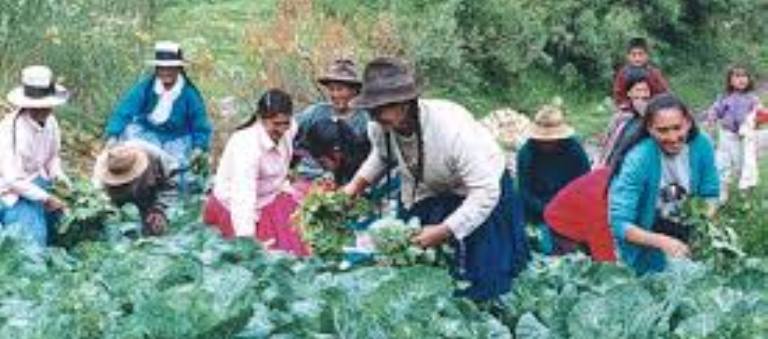
Mujeres, comida y cuidados
[Esther Vivas, 08/03/2014].”Se trata, como dicen las economistas feministas, de colocar la vida en el centro. Visibilizar, valorar y compartir dichos trabajos de cuidados, y la naturaleza. Hacer visible lo invisible, mostrar la parte oculta del “iceberg”. Valorar estas tareas como imprescindibles, reconocer quienes las ejercen y otorgarles el lugar que se merecen. Y, finalmente, compartirlas, ser corresponsables. La vida y el sustento es cosa … Continue reading Mujeres, comida y cuidados

Ni siquiera el cambio climático acabará con el capitalismo
[Razmig Keucheyan, 6 de Marzo de 2014] Siempre y cuando las condiciones para la inversión y las ganancias se mantengan, el sistema se adaptará. Es por eso que necesitamos una revolución. Las sumas gastadas por los gobiernos en las catástrofes han aumentado a niveles sin precedentes, poniendo a los presupuestos públicos en situación de riesgo. Podría decirse que el error más importante de los movimientos … Continue reading Ni siquiera el cambio climático acabará con el capitalismo

Not even climate change will kill off capitalism
[Razmig Keucheyan, 6 March 2014] As long as the conditions for investment and profit remain, the system will adapt. Which is why we need a revolution. The sums spent by governments on catastrophe have risen to unprecedented levels, putting public budgets at risk. Arguably the single most important mistake the revolutionary movements of the 60s and 70s made was to overlook the resilience of capitalism. … Continue reading Not even climate change will kill off capitalism

David Harvey interview: The importance of postcapitalist imagination
[David Harvey, 2013] Editor’s note: This is an excerpt from an interview that ran in Red Pepper and the Irish Left Review in which Harvey sets out some ideas from his new book on the contradictions of capital. He says creating a post-capitalist world requires changing the monetary system and creating a common property regime. Q. Is the era of finance capitalism which has developed … Continue reading David Harvey interview: The importance of postcapitalist imagination

Entrevista a Yayo Herrero sobre ecofeminismo
[Realizada por Ruth Vicente para Ecopolítica, junio 2010] EcoPolítica: Cuando se habla del ecofeminismo, muchas mujeres feministas rechazan dicho planteamiento que, en ciertas corrientes, vuelve a dar a la mujer el papel de cuidadoras de vida. ¿Cómo ves tú estas críticas? ¿Crees que el ecofeminismo podría ser una alternativa para el mundo feminista y englobar al resto de mujeres que no se definen como tal? … Continue reading Entrevista a Yayo Herrero sobre ecofeminismo

El agua en los tiempos de balance
[Elizabeth Peredo Beltrán, octubre 2013] .- Hace ya más de 12 años que los activistas bolivianos vivimos una épica lucha por el agua que terminó con la salida de la transnacional Bechtel del país. Ese episodio de la historia boliviana se convirtió en símbolo de la lucha mundial por recuperar uno de los elementos más importantes para la existencia humana: el agua, como el sentido … Continue reading El agua en los tiempos de balance

Fixing our Global Food System: Food Sovereignty and Redistributive Land Reform
[Peter Rosset, 2009] The recent world food price crisis highlights what many have thought for a long time: the world’s food and agriculture system is broken. Few winners remain in the aftermath of the severe crisis, in which prices for basic food commodities (corn, wheat, rice, soybeans) increased dramatically in 2007 and 2008, only to fall rapidly in the second half of 2008. Although down … Continue reading Fixing our Global Food System: Food Sovereignty and Redistributive Land Reform

Poner la vida en el centro: respuestas del ecofeminismo y del decrecimiento a la UE
[Ecologistas en Acción, 2010] La Unión Europea es una de las regiones más ricas del planeta. Es rica porque la mayoría de los países que la constituyen tiene un PIB alto. Esto es valorado como algo positivo, porque el PIB indica que el capital de los países y sus economías crecen. Los indicadores económicos, como el PIB y el PNB, contabilizan el conjunto de bienes … Continue reading Poner la vida en el centro: respuestas del ecofeminismo y del decrecimiento a la UE

Iniciativa Yasuní-ITT. La difícil construcción de la utopía
[Alberto Acosta, 3 de febrero de 2014] -¿Hubiera modo, replicó don Quijote, de evitar este degüello? Si os incita el valor de estos cipreses, yo os los pago, y permanezcan ellos en pie. -Eso allá se iría con vender la tierra, y no es lo que me propongo, dijo el dueño; antes la estoy desmontando, no tanto por aprovecharme de estos árboles que no valen … Continue reading Iniciativa Yasuní-ITT. La difícil construcción de la utopía

Manifiesto ecosocialista
[Joel Kovel y Michael Löwy 2001] English Version Introducción. La idea de este manifiesto ecosocialista fue lanzada en conjunto por Joel Kovel y Michael Löwy en un taller sobre ecología y socialismo celebrado en Vincennes, cerca de París, en septiembre de 2001. Todos sufrimos de un caso crónico de la paradoja de Gramsci, al vivir en un tiempo cuyo viejo orden está muriendo (arrastrando a … Continue reading Manifiesto ecosocialista


An Ecosocialist Manifesto
[Joel Kovel and Michael Lowy, Sept 2001] Versión en español Introduction The idea for this ecosocialist manifesto was jointly launched by Joel Kovel and Michael Lowy, at a September, 2001, workshop on ecology and socialism held at Vincennes, near Paris. We all suffer from a chronic case of Gramsci’s paradox, of living in a time whose old order is dying (and taking civilization with it) while … Continue reading An Ecosocialist Manifesto
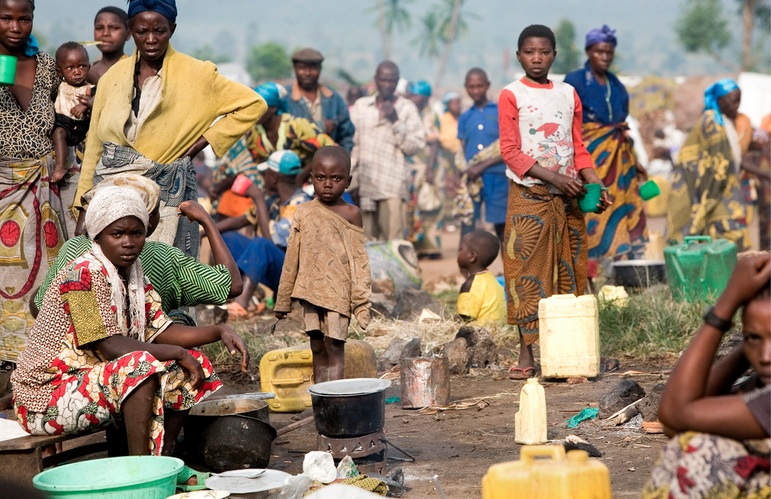
Structural Crisis Needs Structural Change
[István Mészáros] When stressing the need for a radical structural change it must be made clear right from the beginning that this is not a call for an unrealizable utopia. On the contrary, the primary defining characteristic of modern utopian theories was precisely the projection that their intended improvement in the conditions of the workers’ lives could be achieved well within the existing structural frameworkof the criticized … Continue reading Structural Crisis Needs Structural Change

We need to overturn the system
[Nnimmo Bassey interview by Ethan Cox, June 2013] When we speak of Nigeria, and of the Nigerian people’s inspired resistance to the devastation wrought by multinational oil companies such as Shell, the name of the late, and great, Ken Saro-Wiwa is inescapable. But many others have continued to toil in the shadows over the years since Saro-Wiwa’s death. Nnimmo Bassey is one such activist who is … Continue reading We need to overturn the system
 Systemic Alternatives
You must be logged in to post a comment.