




Ecofeminism: Historic and International Evolution
[Laura Hobgood-Oster] Ecofeminism emerged in the 1970s and 1980s as myriad forms of feminist and environmental theories and activisms intersected. The term was introduced by Francoise d’Eaubonne in her book Le Feminisme ou la Mort [Feminism or Death] published in 1974. Some theorists, such as Ynestra King, name it as a third wave of feminism, while others place it in the general category of deep … Continue reading Ecofeminism: Historic and International Evolution

COP21: A new disguise for an old agreement
Pablo Solon The Climate Paris Agreement carries with it the shadow of the Cancun Agreement and like it, will fail. Both Agreements are based on voluntary pledges that prioritized the interests of polluting corporations and governments rather than the needs of humanity and life on Earth. To limit the temperature increase to 2°C, the Cancun Agreement should have guaranteed the reduction of annual emissions of … Continue reading COP21: A new disguise for an old agreement

The Science of Why We Don’t Believe Science
[Chris Mooney, 2011] “A MAN WITH A CONVICTION is a hard man to change. Tell him you disagree and he turns away. Show him facts or figures and he questions your sources. Appeal to logic and he fails to see your point.” So wrote the celebrated Stanford University psychologist Leon Festinger (PDF), in a passage that might have been referring to climate change denial—the persistent … Continue reading The Science of Why We Don’t Believe Science

Se acelera el fin del ciclo progresista
[Raúl Zibechi, La Jornada, Opinion, 30/09/2015] Cada quien elige el lugar desde el cual mira el mundo, pero esa elección tiene consecuencias y determina lo que puede ver y lo que irremediablemente se le escapa. El punto de observación no es nunca un lugar neutro, como no lo puede ser el que observa. Más aún, el observador es modelado por el lugar que elige para … Continue reading Se acelera el fin del ciclo progresista

Marxism and Ecology: Common Fonts of a Great Transition
[from http://www.greattransition.org/] John Bellamy Foster October 2015 Socialist thought is re-emerging at the forefront of the movement for global ecological and social change. In the face of the planetary emergency, theorists have unearthed a powerful ecological critique of capitalism at the foundations of Marx’s materialist conception of history. This has led to a more comprehensive conception of socialism rooted in Marx’s analysis of the rift in … Continue reading Marxism and Ecology: Common Fonts of a Great Transition
Marx’s Ecology in the 21st Century
An article by: Brett Clark and John Bellamy Foster “We contend that Marx’s materialist and metabolic approach, his emphasis on the contradiction between use value and exchange value and between wealth and accumulation, his focus on sustainable human development, and his critique of capital as a whole, provide an invaluable methodological foundation to critique contemporary environmental degradation and to envision social and ecological transformation. To … Continue reading Marx’s Ecology in the 21st Century

The end of capitalism has begun
Without us noticing, we are entering the postcapitalist era. At the heart of further change to come is information technology, new ways of working and the sharing economy. The old ways will take a long while to disappear, but it’s time to be utopian [Paul Mason, 07/17/2015, The Guardian, Illustration by Joe Magee] The red flags and marching songs of Syriza during the Greek crisis, … Continue reading The end of capitalism has begun

Alain Badiou: Eleven points inspired by the situation in Greece
[Verso Books, Miri Davidson, july 09 2015] It is urgently necessary to internationalise the Greek people’s cause. Only the total elimination of the debt would bring an “ideological blow” to the current European system. 1. The Greek people’s massive “No” does not mean a rejection of Europe. It means a rejection of the bankers’ Europe, of infinite debt and of globalised capitalism. 2. Isn’t it … Continue reading Alain Badiou: Eleven points inspired by the situation in Greece

El cristianismo como socialismo light
[Raúl Prada Alcoreza] ¿Qué clase de socialismo es ese que no desmantela los mecanismos de dominación? Que describe las consecuencias de las dominaciones como pobreza; palabra sencilla, elemental, sin mayores atributos que hacer de contraste con la riqueza. Por eso se llega a la inocente conclusión de que lo que se trata es de redistribuir la riqueza. ¿Es un problema administrativo? ¿Se resuelve el problema … Continue reading El cristianismo como socialismo light

Papa Francisco: Participación en el II Encuentro Mundial de los Movimientos Populares
[Expo Feria, Santa Cruz de la Sierra (Bolivia), 09/07/2015] Hermanas y hermanos, buenas tardes. Hace algunos meses nos reunimos en Roma y tengo presente ese primer encuentro nuestro. Durante este tiempo los he llevado en mi corazón y en mis oraciones. Y me alegra verlos de nuevo aquí, debatiendo los mejores caminos para superar las graves situaciones de injusticia que sufren los excluidos en todo el mundo. … Continue reading Papa Francisco: Participación en el II Encuentro Mundial de los Movimientos Populares
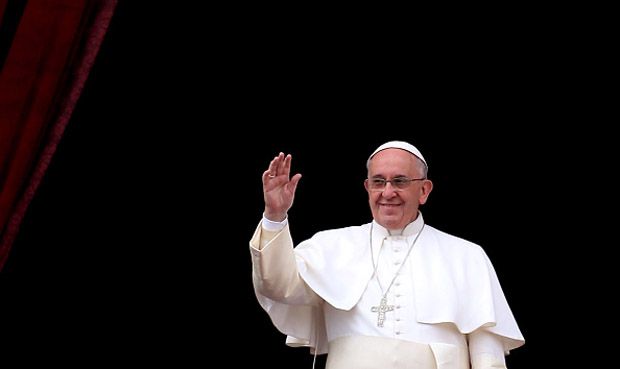
“LAUDATO SI” – A 21ST CENTURY MANIFESTO FOR EARTH DEMOCRACY
[Dr Vandana Shiva – L’Huffington Post Italia, 19 June 2015] Most reports of Pope Francis’s Encyclical in the press before the formal launch yesterday reduced this path breaking document with 246 paras on the contemporary ecological crisis and human crisis to the 4 paras on climate change (para 23-26). But Laudato Si is much wider and much deeper. It is first of all a call … Continue reading “LAUDATO SI” – A 21ST CENTURY MANIFESTO FOR EARTH DEMOCRACY

Rights of Nature: FAQs
[celdf on: http://celdf.org/rights-of-nature-frequently-asked-questions] What do we mean when we say that nature should have rights? Under the current system of law in almost every country, nature is considered to be property, a treatment which confers upon the property owner the right to destroy ecosystems and nature on that property. When we talk about the “rights of nature,” it means recognizing that ecosystems and natural communities are … Continue reading Rights of Nature: FAQs

5 Reasons Pope Francis’ Encyclical on the Environment Matters
[07/06/2015, Reynard Loki, Alternet] The first encyclical on the environment in the history of the Catholic Church has its detractors, but it also has the power to inspire meaningful climate action. Pope Francis’ forthcoming encyclical on the environment has been described as “long-awaited” and “much-anticipated.” Indeed, as Peter Smith, who covers religion for the Pittsburgh Post-Gazette, recently put it: “Rarely in modern times has a … Continue reading 5 Reasons Pope Francis’ Encyclical on the Environment Matters

Catching the Power of the Wind
A Statement of the Occasion of the Thirtieth Anniversary of the United Nations at the Spiritual Summit Conference V October 24, 1975 Published in Evening Thoughts San Francisco: Sierra Club Books, 2006 Thomas Berry On this thirtieth anniversary of the founding of the United Nations we wish to indicate to you our esteem for the work you have accomplished. For thirty years this body has … Continue reading Catching the Power of the Wind

Declaration of the International Forum for Agroecology
Nyéléni, Mali, 27 February 2015. We are delegates representing diverse organizations and international movements of small-scale food producers and consumers, including peasants, indigenous peoples and communities (together with hunters and gatherers), family farmers, rural workers, herders and pastoralists, fisherfolk and urban people. Together, the diverse constituencies our organizations represent produce some 70% of the food consumed by humanity. They are the primary global investors in agriculture, as well as the primary providers of jobs and livelihoods in the world. Continue reading “Declaration of the International Forum for Agroecology”


El concepto de crecimiento verde es absurdo, es el súper oxímoron
Joan Martínez Alier (Barcelona, 1939) es catedrático de Economía e Historia Económica en la Universidad Autónoma de Barcelona. Es uno de los padres fundadores de la llamada economía ecológica, una crítica al enfoque de la economía clásica tradicional. Su obra El ecologismo de los pobres es ya un clásico de la Economía contemporánea. Defensor del decrecimiento, reclama que los países ricos paguen a los pobres … Continue reading El concepto de crecimiento verde es absurdo, es el súper oxímoron
Reclaiming the Commons
[David Bollier] Why we need to protect our public resources from private encroachment.*
They hang the man and flog the woman
That steal the goose from off the common,
But let the greater villain loose
That steals the common from the goose.
—English folk poem, circa 1764
One of the great questions of contemporary American political economy is, who shall control the commons? “The commons” refers to that vast range of resources that the American people collectively own, but which are rapidly being enclosed: privatized, traded in the market, and abused. The process of converting the American commons into market resources can accurately be described asenclosure because, like the movement to enclose common lands in eighteenth-century England, it involves the private appropriation of collectively owned resources. Continue reading “Reclaiming the Commons”
La revolución enfrentada con el eros del poder
[Xavier Ricard Lanata]
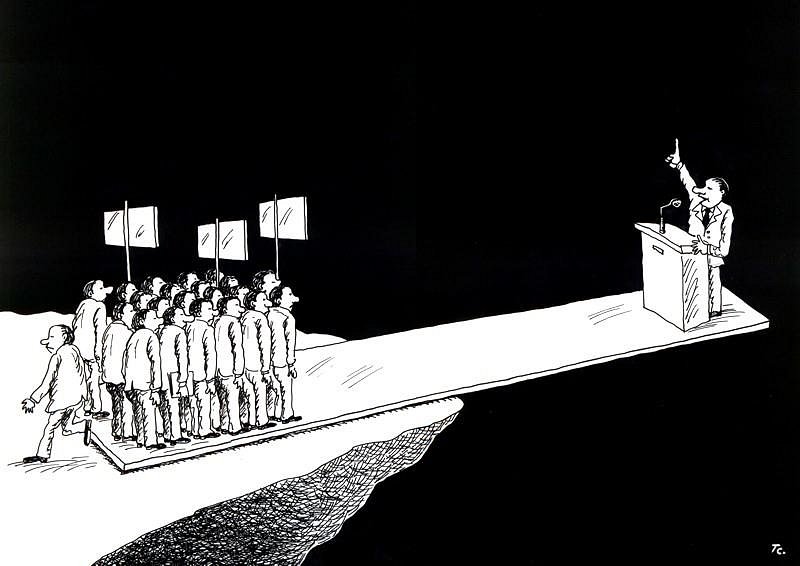
El fracaso histórico del socialismo real y de los procesos de emancipación colectiva nos brinda testimonio de la ambigua relación entre revolución y poder. En vez de tener que escoger entre ambos (el «conocimiento autónomo» – por el lado del polo revolucionario, o, por el contrario, la «ciega obediencia» –por el lado del polo del Estado o imperium, como los denomina Spinoza en su Tratado Teológico-Político), quisiera proponer la idea de que es posible conseguir un equilibrio, que no fuera simplemente empírico sino mas bien ideológico y político. Para ello es preciso contar con un ethos revolucionario, cuya fuente de inspiración radica en la ecología política, y que se substituiría a aquellas formas éticas y políticas características de la primera modernidad. Continue reading “La revolución enfrentada con el eros del poder”
La révolution à l’épreuve de l’eros du pouvoir
[Xavier Ricard Lanata] [1]
L’échec historique du socialisme réel et des processus d’émancipation collective témoigne de l’ambiguïté de la relation entre révolution et pouvoir. Plutôt que de choisir entre l’un des deux termes (la connaissance autonome –pôle révolutionnaire-, ou l’obéissance aveugle –pôle de l’Etat ou imperium, selon la distinction de Spinoza dans le Traité théologico politique), je défends ici l’idée d’un équilibre, qui ne serait pas simplement empirique mais bien idéologique et politique. Cet équilibre exige de produire au préalable un nouvel ethos révolutionnaire -dont l’écologie politique nous fournit le principe, qui viendrait se substituer aux formes éthiques et politiques de la première modernité. Continue reading “La révolution à l’épreuve de l’eros du pouvoir”

¿Postergando la acción ante el Cambio Climático?
[Pere Ariza Montobbio][1] Buscando salidas creativas entre el engaño del poder y la potencia de las alternativas. “Somos todo y parte, expansión en red, Vida inabarcable, rebasa la pared. Cuerpo, palabra y mente, las manos del corazón late amor orgánico, clandestina revolución”[2] Sólo con el incremento de la temperatura media global del planeta de 0,85°C en los últimos 130 años[3] los impactos y consecuencias del … Continue reading ¿Postergando la acción ante el Cambio Climático?
 Systemic Alternatives
You must be logged in to post a comment.