Ein Mittel gegen das Goldfieber

Gemeinden in Bolivien erklären sich zu bergbaufreien Territorien Im März 2025 überstieg der Goldpreis zum ersten Mal in seiner Geschichte die Marke von 3000 US-Dollar pro Feinunze. Viele Regierungen und Unternehmen suchen angesichts des von Trump ausgelösten Handelskriegs und der geopolitischen Streitigkeiten Zuflucht in Gold. Die Nachfrage nach Gold steigt weltweit – außer in ein paar Gemeinden im bolivianischen Amazonasgebiet, die entschlossen sind, den Vormarsch … Continue reading Ein Mittel gegen das Goldfieber

Presentación del libro “El cóndor necio y el dragón al acecho”

Por Juan Pablo Neri Discurso presentado en la Casa Museo Solón, 4 de abril de 2024 Agradecimientos, Antes de iniciar la presentación, me gustaría realizar algunos apuntes de contexto, que me parecen cruciales. Creo que no puede caber duda que ya estamos en un periodo de transformación profunda del sistema mundial. Es decir, no es que esa transformación va a llegar en el futuro, como … Continue reading Presentación del libro “El cóndor necio y el dragón al acecho”

¿Que sigue para Bolivia tras la detención de Camacho?

Pablo Solón [English] El 28 de diciembre el gobierno de Bolivia detuvo de manera violenta al gobernador de Santa Cruz, Luis Fernando Camacho, porque no se presentó a declarar en el “caso Golpe I”. Camacho es acusado de terrorismo por su rol en las protestas de octubre y noviembre de 2019 que llevaron a la renuncia de Evo Morales y al gobierno de Jeanine Añez. Grupos de la población … Continue reading ¿Que sigue para Bolivia tras la detención de Camacho?

What’s Next for Bolivia After Camacho’s Arrest?

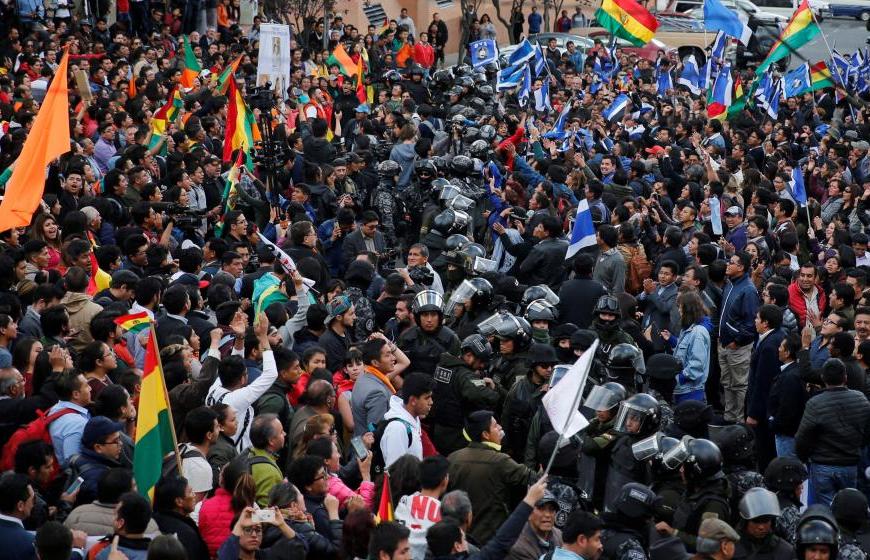
Pablo Solón [Español] On December 28, Bolivian authorities violently detained the governor of Santa Cruz, Luis Fernando Camacho, because he did not appear to testify in the case known as “Golpe I.” Camacho is accused of terrorism for his role in the October-November 2019 protests that led to the resignation of Evo Morales and to the interim government of Jeanine Áñez. In Santa Cruz, groups reacted immediately to Camacho’s … Continue reading What’s Next for Bolivia After Camacho’s Arrest?

Lago Titicaca (Quta Mama) como sujeto de derechos.

Por Alejandra Nuñez del Prado El lago Titicaca es el segundo lago más grande en Sudamérica  con una superficie de aproximadamente 8.400 km2, y un volumen de 930 km3. Es el más alto del mundo por estar localizado a 3.810 m sobre el nivel del mar y comprende dos cuencas: el Lago Mayor o Chucuito de aproximadamente 6.500 km2 , donde se encuentra la máxima … Continue reading Lago Titicaca (Quta Mama) como sujeto de derechos.

What happened to the industrialization of lithium in Bolivia?

By José Carlos Solón More than a decade ago, the lithium industrialization process began in the salt flat in Uyuni, Bolivia. The formula to industrialize lithium in Bolivia has its roots in the National Development Plan (NDP) Bolivia with Dignity, Sovereignty, Productive and Democratic way to Live Well (NDP, 2006-2011) that marked the strategic guidelines of the Bolivian government of then President Evo Morales. That … Continue reading What happened to the industrialization of lithium in Bolivia?

Ohne Ethik gib es keine Zukunft

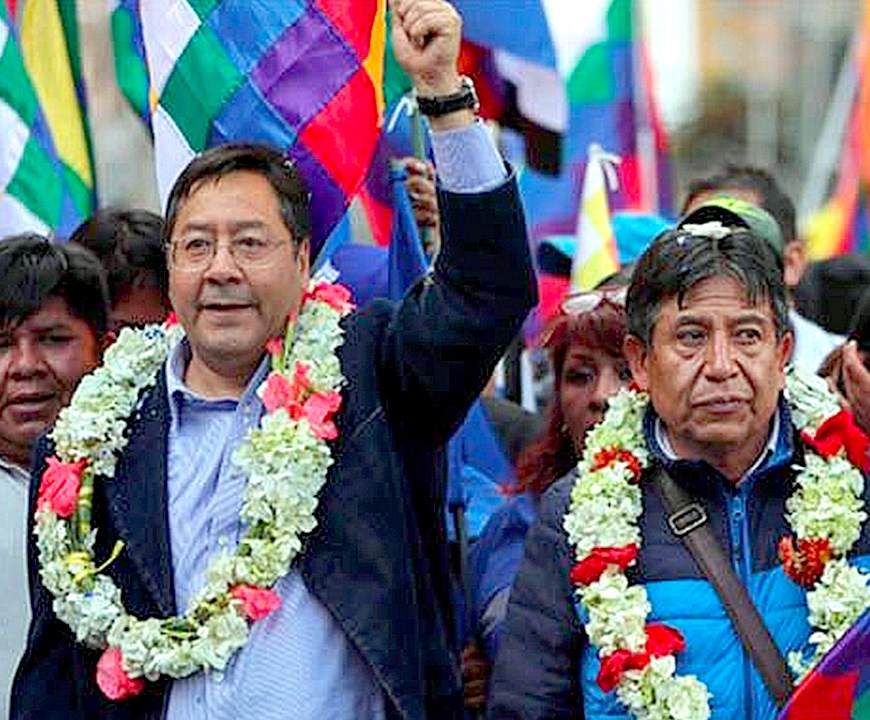
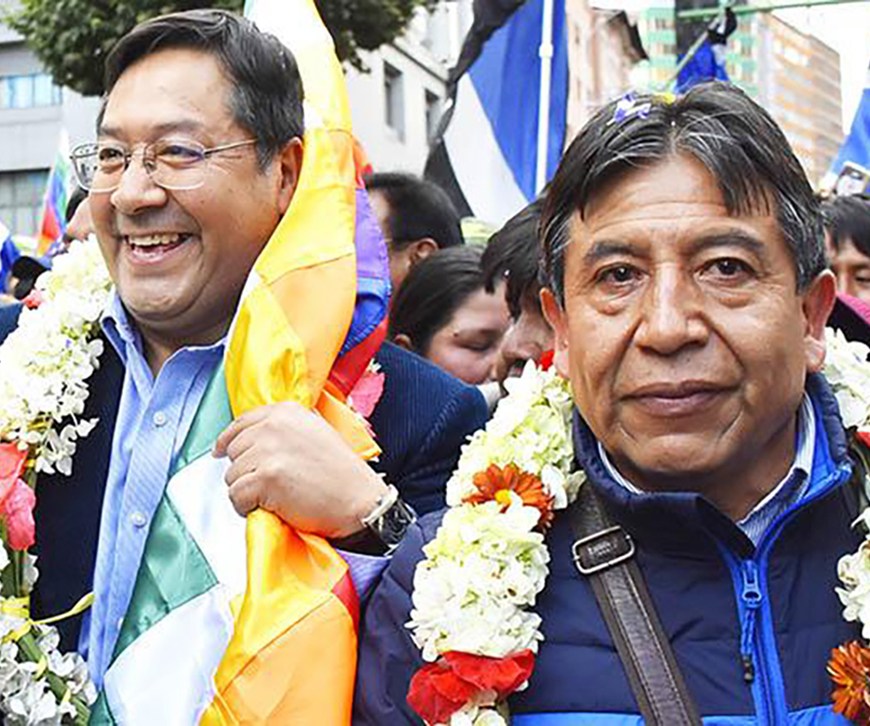
Warum Lucho und David die Wahlen in Bolivien gewonnen haben von Pablo Solón Nach den Vorwahlumfragen schien es ein knappes Rennen zu werden. Nicht einmal die Strategen der MAS hatten mit einem derart deutlichen Sieg von Luis Arce Catacora und David Choquehuanca Cespedes bei den Präsidentschafts- und Parlamentswahlen in Bolivien gerechnet. Am Ende waren es über 25% Prozent Vorsprung vor der Comunidad Ciudadana des sozialliberalen … Continue reading Ohne Ethik gib es keine Zukunft

Perché Lucho & David hanno vinto le elezioni boliviane

di Pablo Solón
Traduzione di Antonio Lopez y Royo

Il Movimento al socialismo (MAS in spagnolo) ha vinto le elezioni boliviane al primo turno, durante il mese di ottobre 2020. Due exit poll (di Ciesmori e Tu Voto Cuenta) basati su diversi campioni, hanno concluso che Luis (“Lucho”) Arce e David Choquehuanca hanno ottenuto più del 50% dei voti, con un vantaggio di oltre il 20% sul candidato al secondo posto, Carlos Mesa di “Comunidad Ciudadana” (CC). Attendiamo i risultati del conteggio ufficiale che sarà disponibile mercoledì o giovedì, ma non ci aspettiamo un cambiamento sostanziale nell’andamento dei risultati di questi due exit poll.

Perché Lucho e David hanno vinto?

Continue reading “Perché Lucho & David hanno vinto le elezioni boliviane”

¿Nuevos horizontes para el MAS?

Un dialogo entre Rafael Archondo y Pablo Solón sobre ¿Por qué ganó el MAS? ¿Cuáles son los desafíos del nuevo gobierno a nivel de la economía, el litio, el biodiesel de segunda generación, los medios de comunicación, la agenda medio ambiental, la justicia y la polarización social? ¿Quién va a gobernar realmente? ¿Evo o Luis? y muchos otros temas más.

Continue reading “¿Nuevos horizontes para el MAS?”

Porque ganó Lucho y David en las elecciones de Bolivia

Por Pablo Solón

[English version] El MAS ha ganado en primera vuelta las elecciones en Bolivia. Dos sondeos en boca de urna (Ciesmori y Tu Voto Cuenta) en base a diferentes muestras sostienen que Luis Arce y David Choquehuanca habrían obtenido más del 50% de los votos y tendrían una diferencia de más del 20% de los votos con el segundo: Carlos Mesa de Comunidad Ciudadana (CC).  Todavía hay que esperar los resultados del conteo oficial que estarán disponibles el miércoles o jueves, pero la tendencia de los resultados de estas dos encuestas en boca de urna difícilmente cambiará de manera sustantiva.

¿Por qué ganó Lucho y David?

Continue reading “Porque ganó Lucho y David en las elecciones de Bolivia”

Why Lucho & David won the Bolivian elections

By Pablo Solón

[Version en Español] The Movement towards Socialism (MAS in Spanish) has won the Bolivian elections in the first round this October 2020. Two exit polls (by Ciesmori and Tu Voto Cuenta) based on different samples concluded that Luis (“Lucho”) Arce and David Choquehuanca had obtained more than 50% of the votes, with a lead of more than 20% over the second place candidate, Carlos Mesa of Citizens Community (CC). We await the results of the official count that will be available on Wednesday or Thursday, but don’t expect a substantive change in the trend of the results of these two exit polls.

Why did Lucho and David won?

Continue reading “Why Lucho & David won the Bolivian elections”

¿Una nueva crisis? Reflecting Upon MAS’ Legacy and the Future of Bolivia

A dialog between Linda Farthing -journalist and researcher who has co-authored three books on Bolivia-, Pablo Solón -social and environmental activist and former ambassador for the Plurinational State of Bolivia to the United Nations (2009-June 2011)-, and Bret Gustafson (Moderator) author of two books on Bolivia, most recently Bolivia in the Age of Gas.

Continue reading “¿Una nueva crisis? Reflecting Upon MAS’ Legacy and the Future of Bolivia”

Will the coronavirus end capitalism?

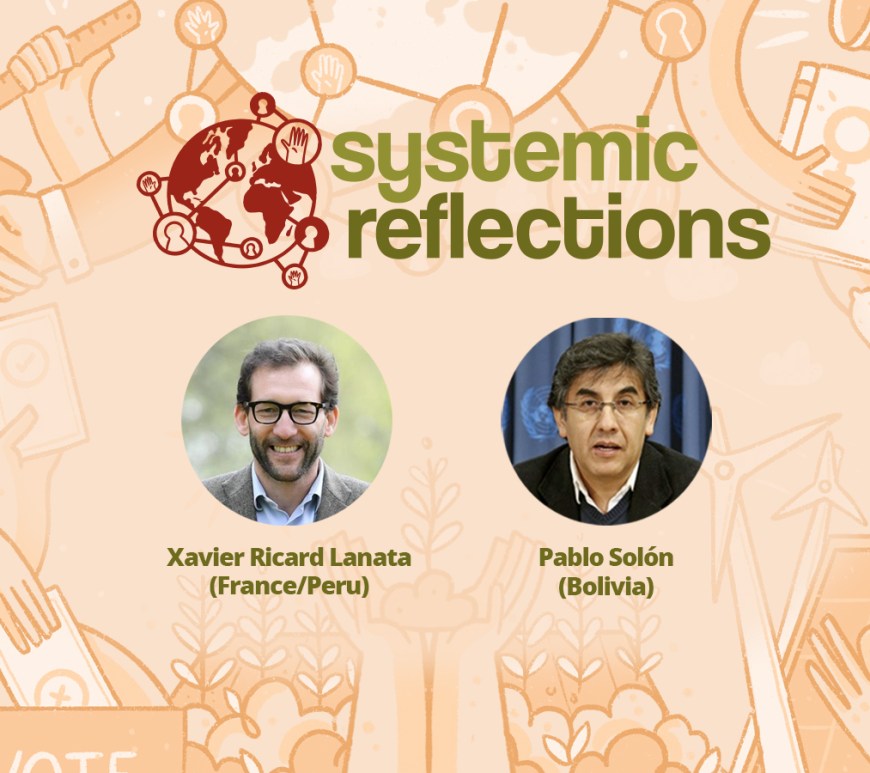
Xavier Ricard Lanata: The dilemmas of the reconfiguration of capitalism The crisis of globalization comes from 2008. Commercial exchanges have been declining. There was a contraction process that predated the virus. Now the virus has aggravated this situation. What is going to happen? Those who are creditors of capital will look for ways to increase the value of it at any cost. In the northern … Continue reading Will the coronavirus end capitalism?

Les Questions d’Evo

Pablo Solón

[English, español] Samedi 24 novembre, la nuit. Une série de questions défilent par la tête de l’ex-Président Evo Morales, alors que, confus, il lit la Loi que l’Assemblée Nationale de la Bolivie vient d’approuver à l’unanimité. Toute ressemblance avec la réalité est pure coïncidence…

Mais pourquoi ils n’ont pas considéré ma lettre de démission à l’Assemblée ? Nous n’avions pas les deux-tiers des votes au Parlement ? Comment peuvent-ils approuver, main dans la main avec les putschistes, une loi pour annuler les élections du 20 octobre et convoquer à des nouvelles élections ? Pourquoi ils ne choisirent pas la route de ne pas accepter ma démission et mettre en clair que la Bolivie avait deux Présidents : le premier putschiste, fasciste et raciste. Le deuxième légitime et indigène et prêt à rentrer en Bolivie ? Sont-ils alors en train d’admettre que j’ai abandonné mes fonctions et que par ce faire cette femme, Añez, a pu s’autoproclamer Présidente ? Continue reading “Les Questions d’Evo”

Evo’s questions*

By Pablo Solón

[Español, français] Saturday, the night of November 24. Any resemblance to reality is pure coincidence. A series of questions pass through Evo’s mind as he reads the law that just passed unanimously in the Senators and Deputies chamber:

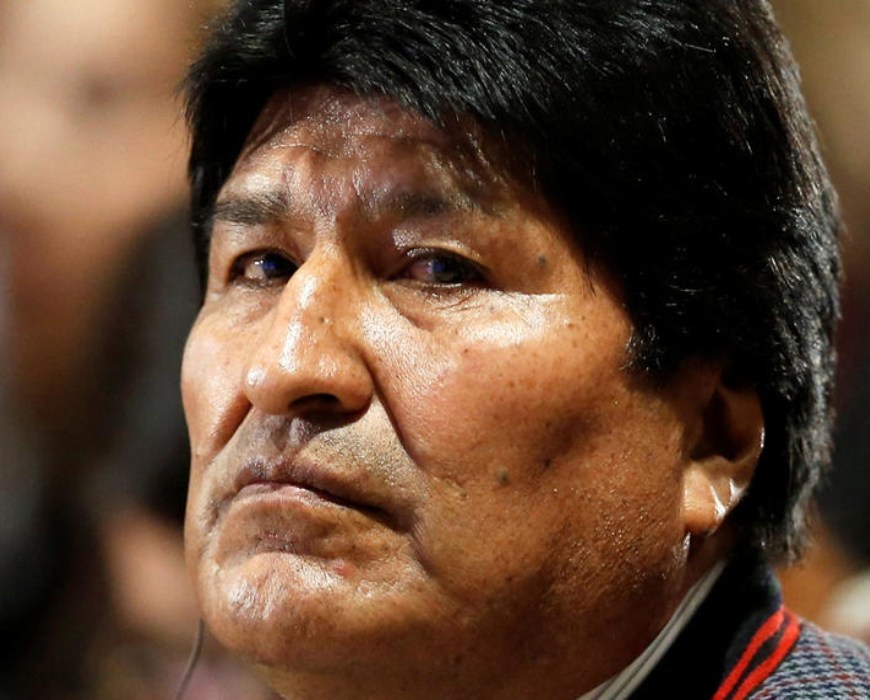
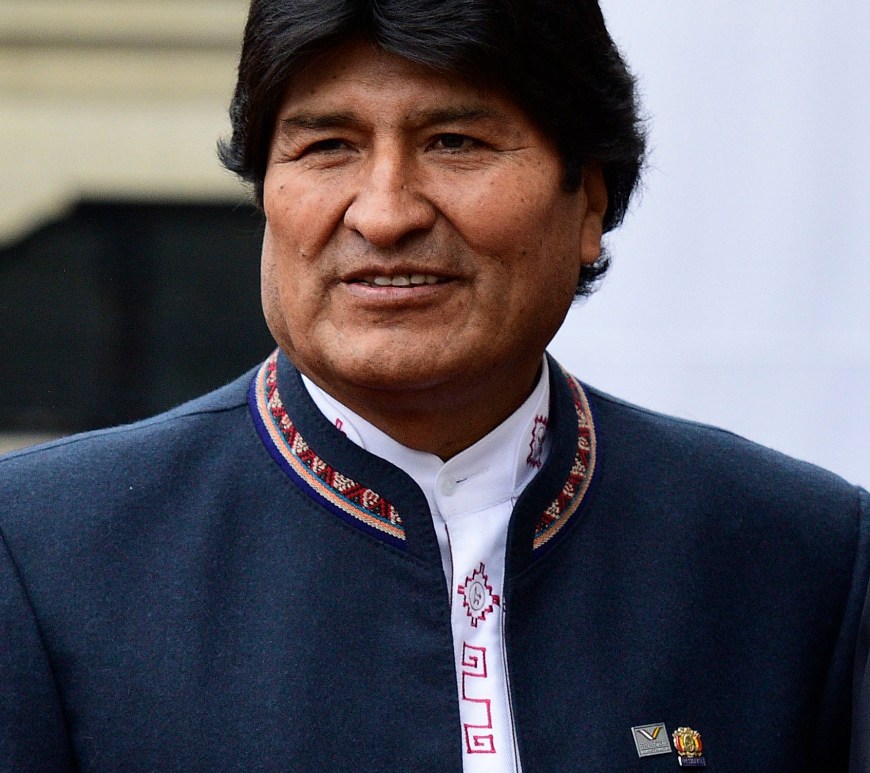
Why did they not consider my resignation letter in the Legislative Assembly? Does my party not have more than two thirds in the parliament? How can they unanimously approve, together with the coup plotters, a law to annul the elections of October 20, and call to new elections? Why did they not follow the path to reject my resignation and thus make it clear to the world that there are two governments, one fascist and racist coup, and another legitimate and indigenous ready to return to Bolivia? Do they not realize that by not discussing my resignation letter they are admitting that I abandoned my duties and that is why Añez proclaimed herself President? Continue reading “Evo’s questions*”

Las preguntas de Evo*

Por Pablo Solón

[English, Français] Sábado, 24 de Noviembre en la noche. Cualquier parecido con la realidad es pura coincidencia. Por la cabeza de Evo pasan una serie de interrogantes mientras lee la ley que acaban de aprobar por unanimidad en la cámara de Senadores y Diputados:

¿Por qué no consideraron mi renuncia en la Asamblea Legislativa? ¿Acaso no tengo más de dos tercios en el parlamento? ¿Cómo pueden aprobar por unanimidad, junto a los golpistas, una ley para anular las elecciones del 20 de Octubre y convocar a nuevas elecciones? ¿Por qué no fueron por el camino de rechazar mi renuncia y así dejar claro al mundo que habían dos gobiernos: uno golpista fascista y racista y otro legitimo e indígena que está listo para volver al país? ¿Es que acaso no se dan cuenta que al no considerar mi renuncia están admitiendo que hice abandono de funciones y que por eso se autoproclamó la Añez presidenta? Continue reading “Las preguntas de Evo*”

Evo Morales: the fall of the hero of the Bolivian transformation

Evo Morales’ achievements in Bolivia should be remembered forever – but the left must also learn from his mistakes. By: Nick Dearden Originally published by Opendemocracy, with permission from the author The resignation of Bolivian president Evo Morales brings to an end an incredible era in Bolivia’s history. Morales, a one-time coca farmer, and the first indigenous president of the country, came to power on … Continue reading Evo Morales: the fall of the hero of the Bolivian transformation

Est-ce qu’il y a eu un Coup d’état en Bolivie ? Et quelle est la situation actuelle ?

Par Pablo Solón [Versión en español – English version] La rébellion bolivienne fut sans conteste, un fait spontané organisé par les jeunes contre les abus du pouvoir. 1) S’il l’avait voulu, Evo Morales aurait pu terminer en beauté son troisième mandat le 22 janvier 2020 avec une popularité jamais vue. Il aurait même pu se présenter aux élections de l’année 2024… s’il n’avait pas forcé … Continue reading Est-ce qu’il y a eu un Coup d’état en Bolivie ? Et quelle est la situation actuelle ?

What happened in Bolivia? Was there a coup?

By: Pablo Solón [version en español – version française] Evo Morales could have finished his third electoral mandate on the 22 January 2020 as a very popular president and the possibility of running for – and even winning – the 2024 elections, if he had not forced through his re-election for a fourth term. As the President of Bolivia, he a) did not recognise the … Continue reading What happened in Bolivia? Was there a coup?

¿Qué pasa en Bolivia? ¿Hubo golpe de estado?

Por Pablo Solón [English version – version française] 1) Evo Morales hubiera terminado su tercer mandato el 22 de enero del 2020 con gran popularidad y con la posibilidad de presentarse, e incluso ganar, las elecciones del 2024 si no hubiera forzado su reelección para un cuarto mandato. Siendo presidente de Bolivia: a) desconoció el referéndum del 2016 que dijo NO a su reelección[1], b) … Continue reading ¿Qué pasa en Bolivia? ¿Hubo golpe de estado?