


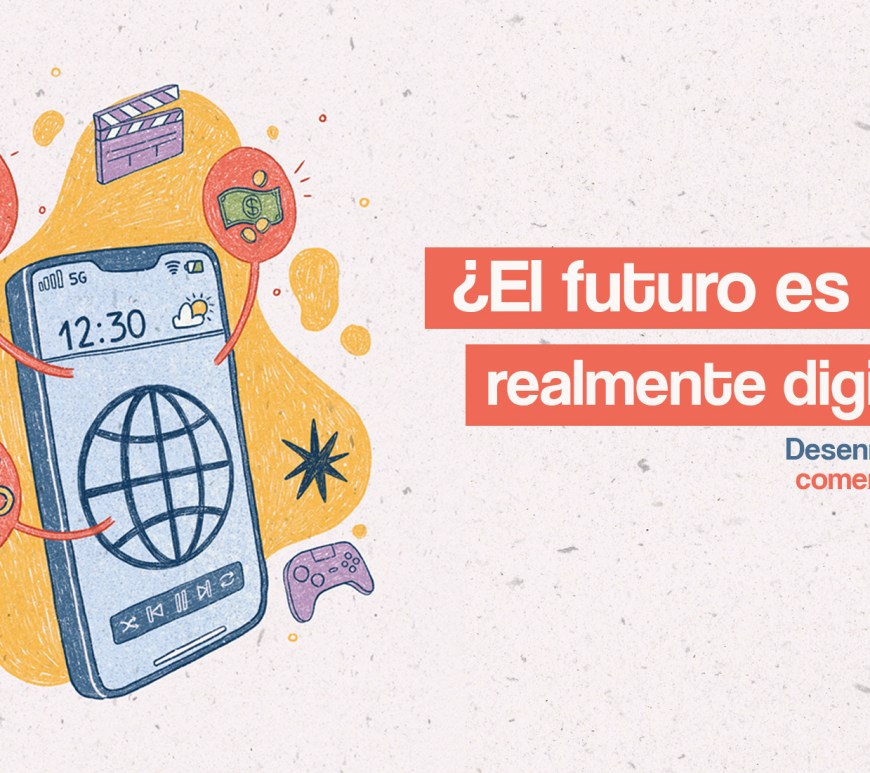
¿El futuro es realmente digital? Desenredando el comercio digital
Por: Mary Louise Malig [English version] Lea la publicación completa aquí Contenido Parte 1: ¿Qué es el comercio digital? Parte 2: La economía de las plataformas digitales y sus propietarios Parte 3: El estado de la negociación sobre las reglas Parte 4: La economía digital: Hay más que el comercio Conclusiones Introducción “Comercio digital” es una palabra de moda actualmente, no solo en los círculos … Continue reading ¿El futuro es realmente digital? Desenredando el comercio digital

Conclusiones
[English] El comercio digital no es nuevo, de hecho, existe desde los años noventa. El comercio digital, por utilizar la definición más estricta del comercio electrónico, es la venta y la compra de bienes y servicios a través de Internet que se entregan digitalmente. Muchos sostienen que, aunque todo el proceso se realice en línea, si el producto final es un bien físico, no se … Continue reading Conclusiones
Parte 4: La economía digital: Hay más que el comercio
[English] La economía digital es un espectro mucho más amplio y el comercio digital es sólo una parte de él. La economía digital implica nuevas tecnologías, una infraestructura más rápida y muchos más trabajadores cualificados en tecnología y otras áreas importantes. Sólo hay que ver la figura de abajo: Tecnologías digitales que ya están aquí o que llegarán muy pronto 1. Tecnologías de cadena de … Continue reading Parte 4: La economía digital: Hay más que el comercio
Parte 3: El estado de la negociación sobre las reglas
[English] Ya en 1998, la Organización Mundial del Comercio (OMC) emitió una Declaración Ministerial sobre el Comercio Electrónico Global en la Segunda Conferencia Ministerial de la OMC celebrada en Ginebra (Suiza). En ella, solamente se reconocía que el comercio electrónico global estaba creciendo y que, por lo tanto, la OMC necesitaba tener un programa de trabajo para discutir las normas que regirían esta nueva forma … Continue reading Parte 3: El estado de la negociación sobre las reglas
Parte 2: La Economía de las Plataformas Digitales y sus Propietarios
[English] Para entender mejor la economía de las plataformas digitales, desglosaremos los distintos tipos de plataformas; veremos cómo los datos pasan de ser materia prima a ser un bien monetizado en la cadena de valor digital; y analizaremos cómo el debate sobre el comercio digital no debe limitarse al tema de aranceles a los bienes y servicios digitales, y debe incluir la problemática de los … Continue reading Parte 2: La Economía de las Plataformas Digitales y sus Propietarios

Parte 1: ¿Qué es el comercio digital?
[English] El comercio digital, al igual que el comercio tradicional, es parte de la economía. El comercio digital es un componente de la creciente economía digital y afecta a la economía no digital que es mucho más amplia. El comercio digital no es nuevo. Sin embargo, a pesar de que existe desde hace tiempo, no hay acuerdo a nivel internacional sobre su definición y alcance. … Continue reading Parte 1: ¿Qué es el comercio digital?

The paradigm of care
Raffaella Bollini
[Español] In the last days on the media has been given prominence to a recent discovery: on the contrary of what for a long time has been believed, Neanderthal women were hunters as well as men, and artists.
The ancient and more and more pressing question returns: when did the human being begin to build the hierarchy that governs the world, the one that puts the man above the woman, the dominant man above the dominated, the human being above nature? Where does our destructive lust for power and domination stem from, which is driving us straight into ecocide and suicide?
Continue reading “The paradigm of care”
Por que las elecciones en Ecuador nos afectan a tod@s
José Correa Leite
Las elecciones ecuatorianas han desvelado una fuerte disputa entre la izquierda latinoamericana. Se trata, como dicen Lowy y Bensaid, de una bifurcación en la Historia.
SÃO PAULO – Un artículo publicado en Brasil de Fato (periódico on line del Movimiento de los Sin Tierra), firmado “De la redacción”, está circulando en la militancia de izquierda brasileña: “El candidato ecosocialista de Ecuador: indígena y partidario de los golpes de Estado en América Latina”. Este artículo pretende demostrar que la candidatura de Yaku Pérez, del Movimiento de Unidad Plurinacional Pachakutik y apoyada por la Confederación de Pueblos Indígenas del Ecuador (Conaie), tendría un carácter derechista.
Continue reading “Por que las elecciones en Ecuador nos afectan a tod@s”
El paradigma del cuidado
Por Raffaella Bollini
[English] En los últimos días los medios de comunicación han destacado un reciente descubrimiento: en contra de lo que se creyó durante mucho tiempo, las mujeres neandertales eran cazadoras al igual que los hombres, y artistas.
Vuelve la antigua y cada vez más acuciante pregunta: ¿cuándo empezó el ser humano a construir la jerarquía que rige el mundo, la que pone al hombre por encima de la mujer, al hombre dominante por encima del dominado, al ser humano por encima de la naturaleza? ¿De dónde procede nuestro afán destructivo de poder y dominación que nos lleva directamente al ecocidio y al suicidio?
Continue reading “El paradigma del cuidado”
Conclusions
[Español] Digital Trade is not new, in fact, it has been around since the nineties. Digital trade, to use the narrowest definition of e-commerce, is the sale and purchase of goods and services via the internet of which they are delivered digitally. Many argue that even if the whole process happened online, if the end product is a physical good, then it is not digital … Continue reading Conclusions
Part 4: The Digital Economy: There is more to it than trade
[Español] The Digital Economy is a much broader spectrum and digital trade is just a part of it. Digital economy involves new technologies, faster infrastructure and a whole lot more skilled workers in technology and other significant areas. Just see the figure below: Digital Technologies that are already here or coming real soon 1. Blockchain technologies Blockchain technologies are a form of distributed ledger … Continue reading Part 4: The Digital Economy: There is more to it than trade
Part 3: The State of Play on the debate on the Rules
[Español] As early as 1998, the World Trade Organization (WTO) had issued a Ministerial Declaration on Global Electronic Commerce at the Second WTO Ministerial Conference in Geneva, Switzerland. Simply recognizing that global electronic commerce was growing and that therefore the WTO needed to have a work program to discuss rules that would govern this new form of trade. The most significant impact of this Ministerial … Continue reading Part 3: The State of Play on the debate on the Rules
Part 2: The Digital Platform Economy and Who Owns It
[Español] To understand the digital platform economy better, this paper breaks down below the various types of platforms, how data changes from raw material to monetized good in the digital value chain and how the discussion on digital trade should not be limited to whether or not tariffs are to be imposed on electronic goods and services but rather, more importantly, should include the complex … Continue reading Part 2: The Digital Platform Economy and Who Owns It
Part 1: What is Digital Trade?
[Español] Digital trade as traditional trade, is a part of the larger picture of the economy. Digital trade is part of the growing digital economy and affects the non-digital larger economy. Digital trade is not new. However, despite it being around for a while, there is no definitive definition and scope globally agreed upon. This has led to lack of consensus and a plethora of … Continue reading Part 1: What is Digital Trade?
Is the future really digital? A deeper understanding of digital trade
By: Mary Louise Malig [Versión en español] Read the entire publication in PDF here Contents Part 1: What is digital trade? Part 2: The Digital Platform Economy and Who Owns It Part 3: The State of Play on the debate on the Rules Part 4: The Digital Economy: There is more to it than trade Conclusions Introduction A current buzzword not only in technology circles … Continue reading Is the future really digital? A deeper understanding of digital trade

Dominant trends in the capitalist world system in the context of the pandemic
Edgardo Lander
1. With the pandemic, debates that had already been taking place from a wide political spectrum of questioning neoliberal globalization are accelerating. The fragility of the productive chains long established with the aim of maximizing short-term corporate profits has fallen to bare in their extraordinary vulnerability. What happens in one link in the chain can have global consequences. Dependence on imports for materials is as critical as basic health equipment and food. This situation has placed in political debate the need for higher levels of self-sufficiency or sovereignty in many different countries of the world. The pandemic has stripped the world like never before. While richer countries are grabbing vaccines for their population and refuse to relax the rules on protection of intellectual property controlled by pharmaceutical corporations developed thanks to massive public funding, many countries in the South will not have widespread access to vaccines until 2022, according to estimates by the People’s Vaccine Alliance[1].
Continue reading “Dominant trends in the capitalist world system in the context of the pandemic”
Tendencias dominantes en el sistema mundo capitalista en el contexto de la pandemia
Edgardo Lander, 10 de diciembre 2020, Seminario del Diálogo Global por Alternativas Sistémicas.
1. ¿Representa la pandemia el fin de la era de la globalización neoliberal? Con la pandemia se aceleran debates que ya se venían dando desde un amplio espectro político de cuestionamiento a la globalización neoliberal. La fragilidad de las largas cadenas productivas establecidas con el objetivo de maximizar las ganancias corporativas a corto plazo ha quedado al descubierto en su extraordinaria vulnerabilidad. Lo que pase en un eslabón de la cadena puede tener consecuencias globales. La dependencia en importaciones para asuntos tan críticos como equipos básicos de salud, y los alimentos, ha colocado en el debate político la necesidad de mayores niveles de autosuficiencia o soberanía en muy diferentes países del mundo.
Continue reading “Tendencias dominantes en el sistema mundo capitalista en el contexto de la pandemia”
Ricardo Antunes: trabalho uberizado nos levará à escravidão digital
15 de Novembro de 2020 A crise pandêmica que estamos vivendo por conta do coronavírus é uma “expressão” do sistema antissocial do capital, diz Ricardo Antunes à IHU On-Line. “O vírus não é algo que ocorre ao acaso” e se “esparrama pelo mundo”. Ao contrário, é consequência de um modo de vida que gera inúmeros excluídos em todo o mundo e que está ameaçando o … Continue reading Ricardo Antunes: trabalho uberizado nos levará à escravidão digital


Confronting Chaos / Confrontando el Caos / Enfrentando o Caos / Affronter le Chaos
¿Dónde estamos y qué hacer? Activar subtítulos en español, inglés, francés, italiano o portugués.

Transizione Sistémica
Pablo Solon
[Español, English] Le seguenti proposte[1] cercano di motivare la riflessione su come affrontare le crisi sistemiche. Sono idee che nascono da un contesto sudamericano e in particolare dal contesto boliviano.
1) Dobbiamo ripensare i processi di transizione dalle crisi sistemiche che la comunità della Terra sta vivendo. Se è indubbio che le crisi ecologiche e climatiche sono le più rilevanti perché mettono a rischio la continuità della vita così come la conosciamo, le transizioni devono essere multidimensionali e comprendere i rapporti con la natura, il quotidiano, lo Stato e il sistema politico, l’economico, il sociale, lo spirituale, l’energia, le relazioni internazionali e l’etica.
Continue reading “Transizione Sistémica” Systemic Alternatives
You must be logged in to post a comment.